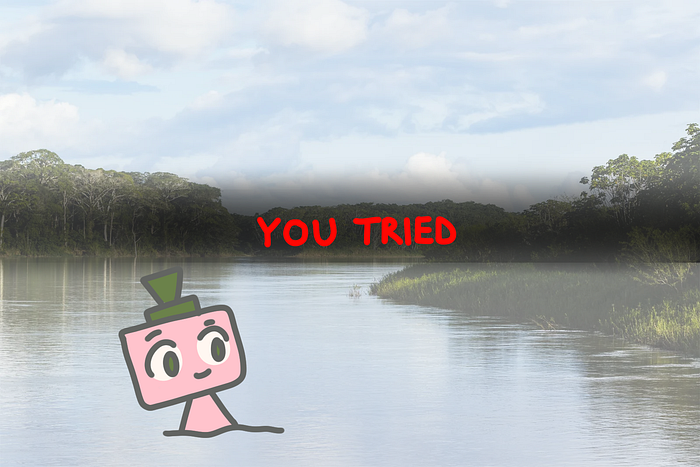
I have been told that within my work I overvalue failure. So, in this article, I’d like to talk about why acknowledging and trying to grow from failure is more important than trying to avoid it.
For some context, I ’m pursuing a PhD exploring Chance in Filmmaking. Within my practice, I define chance as ‘agency control’, and I try to put myself in scenarios where I do not have full control to try and see what I can discover from the unexpected. Part of the intention of this framework is to force serendipity to occur.
For example, I will draw a random word from a hat and give myself a day where I must complete a film.
This has a prompt (the word/activity), a restriction (the time limit), and a commitment (forced to produce something).

If, let’s say, that the prompt I get is ‘bird’, and I find no birds on the day, have I failed? Well, no. For one, it would force me to innovate, causing me to maybe make a bird via a drawing or puppet, or act as a bird, or do research into birds. It would also raise questions of ‘why were there no birds?’.
Usually I create a film, followed by a ‘Production History’ of the film where I reflect on the process. This means that every creation has room for analysis and reflection. This gives me further room to, for example, enquire into ‘why were there no birds?’.
There is a lot of value in initial aims and goals going sideways. With chance, you need to work with whatever happens.
Within my own work, failure has cropped up a few times.
Failure by Circumstance
With my film Disseminate, originally it was meant to be a big collaborative project, which fell through firstly due to weather, and then due to people pulling out. Instead, the project turned into an interesting introspective piece dealing with legacy and the uncontrollable memetics of creation. These thoughts are still ones which I am chewing on today. Also, the film process made me realise that it’s better to keep things casual and flexible, even if a project takes a year (like Communication).
Failure by Over-planning
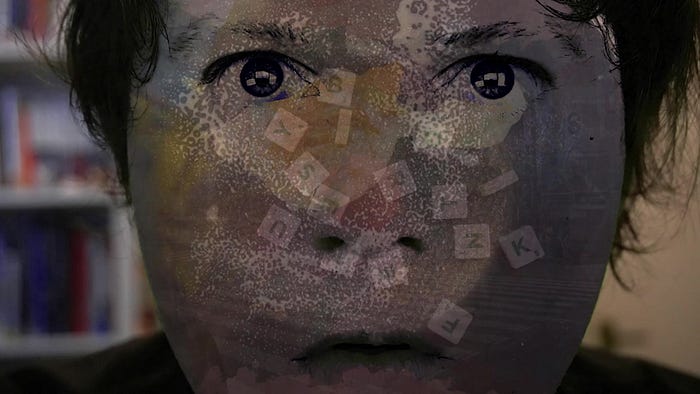
My film Graffiti was originally meant to be a documentary, but because of burnout I shelved the footage for over a year. The reason I ran out of steam was because I did not know when to stop researching, always feeling like I ‘never had enough’. That feeling can mean you never produce anything. I learnt the importance of limits (for me as a creative). The documentary ‘failed’, but something else came from the effort.

Failure by Technical Limitations
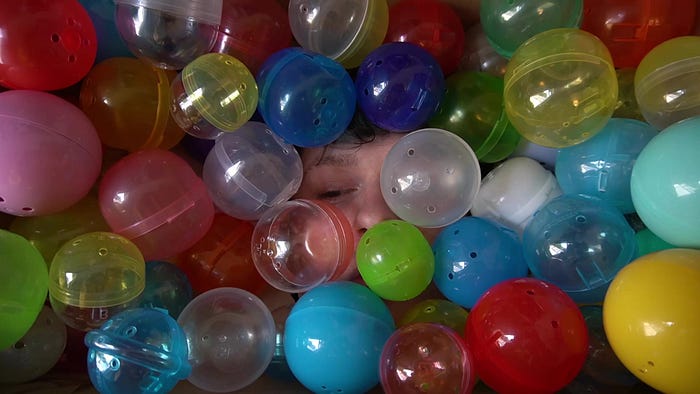
In Gacha’nce, my original plan of an infinite grid of opening gacha machines fell through because I both A) did not have enough footage, and B) my PC could not handle a render of that many clips simultaneously (it was crash central). Though, going away from this plan allowed a piece which was more varied to emerge. I learnt early on to accept imperfection and move on.
Failure by Conceptual Misfire
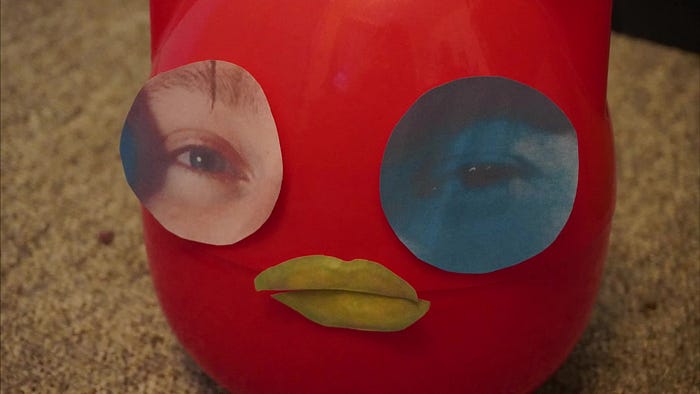
For Genesis, I had to abandon my original concept. I wanted to have the entire piece be within a chromakeyed candle flame. It looked horrible and was boring. Instead, I leant into found object puppets using collage to tell a narrative. Since then, my interest in puppets has expanded. This experience reinforced my thought that not every idea works in practice, and it’s okay to pivot.
And the list goes on and on. Many of the things I try just does not work, and that’s okay. There is value in the attempt — not only spiritually and morally, but in terms of transferable knowledge and progress.
Hell, even going back in time to 2015 with my comic San & Cuatro, I quit because I was comparing myself to others, and felt that my art was not as good and not worth the time. In the moment, I had not realised how much I had improved over an extremely short period of time. Now, I try and avoid this. When framing things within failure or success, you miss out on the minor victories or chances for growth.
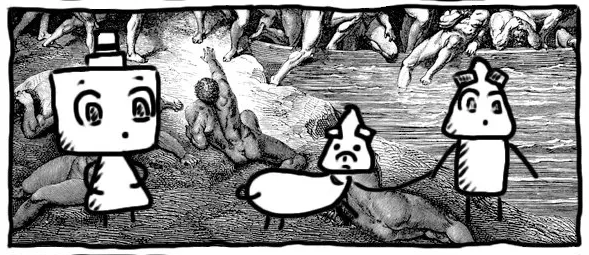
To zoom out a bit, what even is success? I know this type of meta-conversation is frustrating to some, but for me this is the true meat and potatoes when it comes to academia (or life, really).
Is success making a lot of money? For some, sure. That is one metric. Though, by that metric many of the great artists are unsuccessful, as their pieces only got value after they died. Also, there are many that have money and are extremely depressed (as annoying as that can be to think about).
Then, is success being remembered? Remembered for good things, or bad things? Also, through whose lens? I know I am loved by some and hated by others. Everyone is. That is something that comes for free with existence. Also, on what scale? Something which is remembered today, will it be remembered in 10 years? 100 years? 1000 years?
Then is success being popular? Is success being happy? Is success being healthy? Is success having experiences? Is success doing something first?
The point being that notions of ‘success’ are largely arbitrary. Success is whatever you want it to be. And if success is a personal, moving target, then the only reliable constant on the path to it is the process of learning, which failure provides in abundance.
Now, I can imagine that some may view this as a ‘cope’, a way to run away from either the ‘shame’ or ‘responsibility of admitting’ failure. Though, no one lives life without failure, unless one chooses not to try, and even then, many would view that a failure in and of itself.
I feel that it depends on what you put your focus on. If you want to look ‘cool’, then to some a person who never misses can be seen as way more impressive than a person who fumbles.
I, personally, value learning. You learn more from failure. It gives you the ability to reflect, adjust, and try again. Failure is one of the first steps to ‘success’, with whatever ‘success’ being is to you. For me ‘success’ is understanding — the world, others, yourself.
The ego can be one of the biggest barriers in life. To fail, for some, is to admit defeat. I believe that these are not one and the same. Failure is an attempt without success. To be defeated is to accept that failure is one’s end point — an inevitable result of trying. There is no defeat when failure is fun.
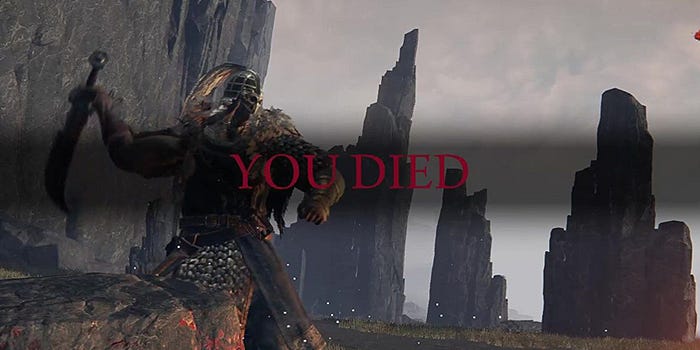
Think of a hard video game (Elden Ring, the Binding of Isaac, etc.), for many, the fun comes from overcoming difficulty. This happens, naturally from trying, failing, and learning small things along the way. ‘This boss moves like this’, ‘if I look here, I am likely to find an item that will help me’, and ‘I can skip this area if I go through here’, and so forth and so on. Exploration and giving it a go are the gateways to getting ‘better’. These ideas have been touched upon in Jesper Juul’s ‘The Art of Failure’ if you want to explore them further.
Success is also, like all ‘good’ things in life, over-represented. People often only talk about the winners. If you go online and want to share moments of your life with your friends and family, people generally share what’s going well and omit what is going poorly. People don’t want to look bad, or burden others with the negative aspects of life (which we all go through, to different degrees). Even in business, as noted by Makridakis, Hogarth, and Gaba (2009) in ‘Dance with Chance’, no business in the ‘Fortune’s most admired companies 1983–2008’ continued to expand at the same rate. Some completely fell off the list, some dipped, some got absorbed by other businesses. Even ‘titans of success’ with what can feel like an infinite number of resources and backing, can come crashing down.
Go through a few actors or directors’ Wikipedia pages and watch every film on their filmography. I can guarantee your attention will dip at some point, one of the films would have been a financial flop, and for some, the movies just suddenly stop. I bet you though, that the ‘successes’ stand out. For some, a single moment in one’s life makes them a success. What about the rest of the time?
When making an attempt at anything, it is human hubris to assume that an outcome was guaranteed. Alternatively, it is underestimating the world. There are so many variables with almost anything, that most assumptions are often too generalised.
What I really struggle to wrap my head around is the celebration around the ‘I got it right the first time’. Congratulations, you learned nothing (or less, anyways). I don’t really understand the flex. The idea that you are born as some deity which has nothing to gain from the world.
With all of my failures recently, I never felt as though I’d been knocked down. The current just shifted. The river still flowed. When something collapses in my process, be it an idea, a collaborator, a render, the story doesn’t end; it changes direction. The so-called ‘failures’ are just the ebb and flow of life.
That’s why I don’t think of failure as a wound to heal from, but as evidence that I was paying attention. The work keeps moving forward, only through different channels than I first imagined.
 Brandon John Barnard
Leave a comment